

Skin Cancer Surgery
Skin cancer arises from abnormal growth of skin cells, most often driven by cumulative UV exposure, and Australia has one of the highest rates in the world. The three main types are basal cell carcinoma (BCC), squamous cell carcinoma (SCC), and melanoma, each with different behaviour and risk.
Basal cell carcinoma is the most common and least aggressive type, growing slowly and almost never spreading to other parts of the body. It typically appears as a pearly or shiny bump, or a pink scaly patch, often with visible small blood vessels. BCCs may invade locally, however, and if left untreated can involve cartilage, bone or other deeper structures.
Squamous cell carcinoma typically grows faster than BCC and carries a small but real risk of spreading to lymph nodes, particularly in high-risk locations such as the lip or ear. It often presents as a scaly, crusted, or tender lump, and may arise from precancerous sun-damaged skin (actinic keratosis).
Melanoma is less common but the most serious, arising from pigment-producing cells and carrying a significant risk of spreading elsewhere in the body if not caught early. It usually presents as a new or changing mole — the ABCDE rule (Asymmetry, Border irregularity, Colour variation, Diameter over 6mm, Evolving) is a useful guide, though any lesion that looks or feels different from the others is worth checking. Some melanomas are raised, firm and fast-growing, and may not be pigmented at all, so any new skin lesion that continues to grow should be assessed.
Diagnosis is usually confirmed by biopsy, and management is guided by type, size, and location. Surgical excision with a margin of normal surrounding skin remains the standard treatment for all three types, with clearance confirmed on pathology and wider margins used for melanoma depending on tumour thickness. For select superficial BCCs and SCCs in situ, non-surgical options such as topical creams or cryotherapy may be appropriate. For melanoma, a sentinel lymph node biopsy may be recommended alongside wider excision for thicker tumours and those with high risk features.
Careful and considered reconstruction is an essential part of skin cancer surgery, particularly on the face, where the method of closure largely determines the final appearance. Where possible, wounds are closed directly, with the scar placed along natural skin creases. Larger defects may need a local flap, which moves adjacent skin of matching colour and texture into place, or a skin graft. Areas such as the ear, nose, eyelids and lips require particular care to preserve both shape and function.
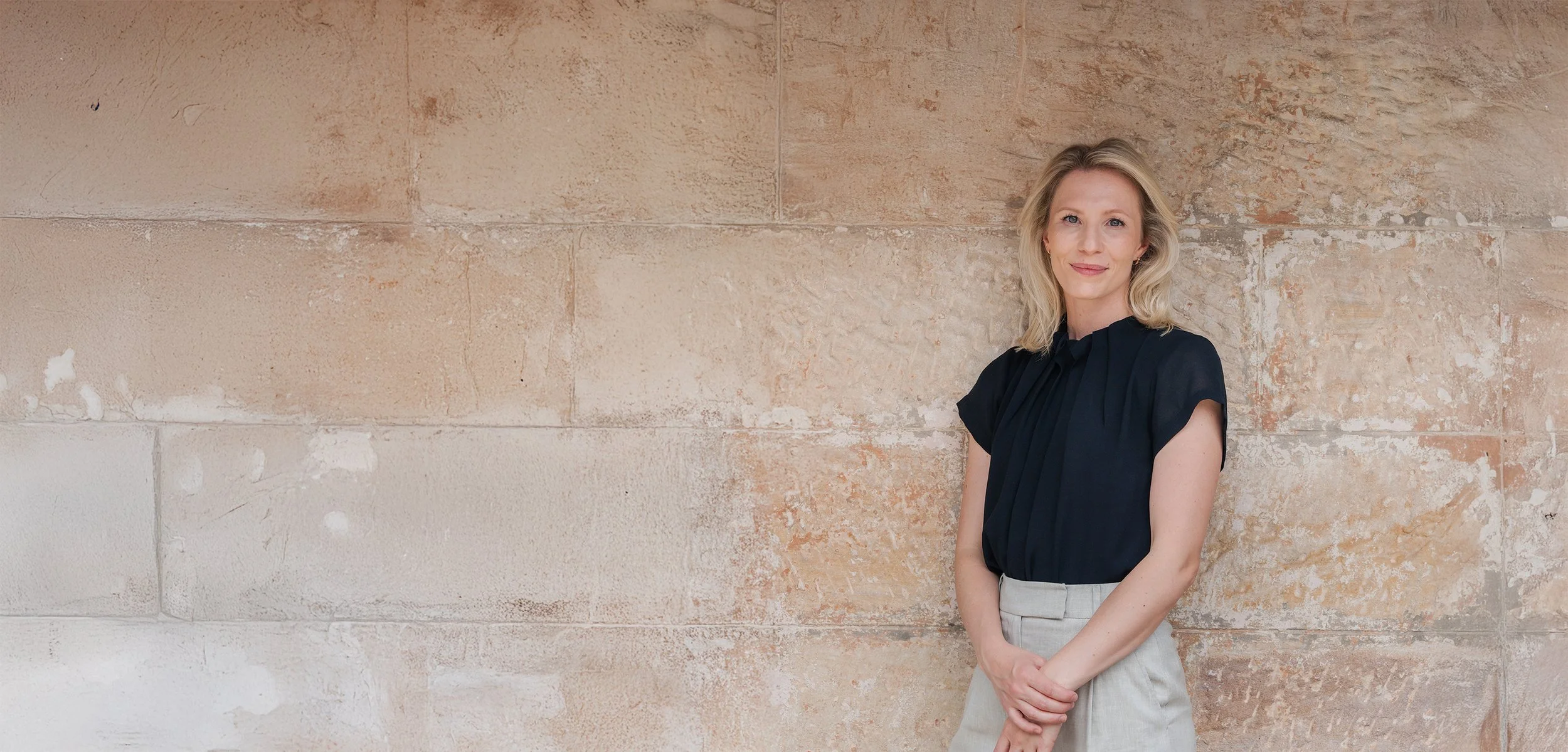
DR ELLE VandervorD
Sydney Plastic, Reconstructive & Craniofacial Surgeon
Dr Vandervord consults with patients and families across Sydney at the Children's Hospital at Westmead, and on the North Shore & Northern Beaches.